



Grasping Your First Experience at a Dentist Office Near Me

What to Expect on Your First Visit to a Dentist Near Me: A Complete New Patient Dental Appointment Guide
By Omar Villavicencio, D.D.S.
Your first dental visit establishes a clear baseline for oral health and demystifies what a “dentist near me” appointment looks like for new patients. This guide explains who should come to a first visit, what the clinical team evaluates, and the practical steps you can take before, during, and after the appointment to reduce anxiety and maximize preventive benefit. Many new patients search for phrases like “best dentist close to me” or “dentists office near me” while feeling uncertain about X-rays, insurance, or whether a cleaning will hurt — this article answers those exact concerns plainly and efficiently. You will learn how to prepare (forms, records, questions), what the clinical exam and cleaning involve, why X-rays are used and which types you might encounter, and how to handle insurance and anxiety so the visit is productive. The following sections walk through preparation, the clinical sequence of an exam and cleaning, diagnostic imaging details, insurance navigation, anxiety management strategies, and child-first-visit guidance to set up lifetime oral health. By the end you’ll have concrete checklists, comparison tables, and questions to take into your appointment so the first visit becomes a clear, reassuring step toward better oral health.
How Should I Prepare for My First Dental Appointment?
A thoughtful pre-visit routine reduces stress and speeds check-in by confirming administrative and clinical details ahead of time. Begin by scheduling at a convenient time, assembling your ID, insurance card, medication list, and any prior dental records so staff can quickly verify your history; this preparation helps the dental team focus on exam and treatment planning rather than paperwork. Provide a concise medical history that lists current medications, allergies, cardiac conditions, pregnancy, or bleeding disorders since these factors change clinical decisions such as anesthesia or antibiotic premedication. Preparing a prioritized list of questions and concerns ensures you won’t forget to ask about costs, X-ray needs, treatment timelines, or emergency contact procedures during your consultation. Completing these steps ahead of arrival shortens your appointment and gives the clinical team the context they need to assess risk and create an individualized plan.
Before the table below, here is a short checklist of what to bring and complete for a first visit so you can arrive ready and confident.
- Bring photo ID and your dental insurance card so reception can verify benefits quickly.
- Bring a current medication list and note any medical diagnoses that affect dental care.
- Bring prior dental records or restorative work documentation if available to avoid duplicate X-rays.
- Complete registration, consent, and medical history forms in advance if the office provides them online.
Preparing these items reduces administrative delays and lets the visit focus on clinical assessment and preventive care. If you arrive prepared, the team can spend more time on the exam, cleaning, and personalized oral health advice.
What New Patient Forms and Medical History Should I Complete?
Most dental offices ask new patients to complete a set of standard forms that capture demographic, insurance, and health information so clinicians can safely provide care. Typical forms include registration (contact details and emergency contact), medical/dental history (current conditions, medications, allergies), consent for treatment (agreement to proceed), and privacy/HIPAA acknowledgement. Providing accurate medication names and dosages is especially important because drugs like blood thinners or bisphosphonates change treatment planning and healing expectations. If you have complex medical care, note your primary physician and bring recent medical summaries; the team may need to coordinate care for safe dental procedures.
This table clarifies the most common forms and why each is requested; supplying accurate information speeds care and prevents misunderstandings. If you’re unsure about past procedures, request records from previous providers in advance to avoid unnecessary repeat X-rays.
Which Questions Should I Ask My Dentist During the First Visit?
Arrive with a prioritized set of questions so you can make informed choices during your consultation and understand next steps in treatment planning. Start with essentials such as what preventive services are recommended today, whether X-rays are needed and why, and what the expected costs and follow-up timeline will be if treatment is recommended. Ask specific, short questions about pain management options, sedation availability for anxious patients, and how urgent findings are prioritized so you know whether to schedule treatment immediately. If you have dental insurance, ask what preventive services are covered and whether any recommended restorative work requires pre-authorization.
- What preventive services do you recommend today and why?
- Are X-rays necessary now, and which types will be taken?
- What are the expected costs or out-of-pocket estimates for recommended treatment?
Write down concise answers during the visit to reference later and request a written treatment plan so you can compare options and costs before consenting to additional work. Clear questions and documented answers help you feel in control and reduce follow-up confusion.
What Happens During the First Dental Exam and Cleaning Procedure?
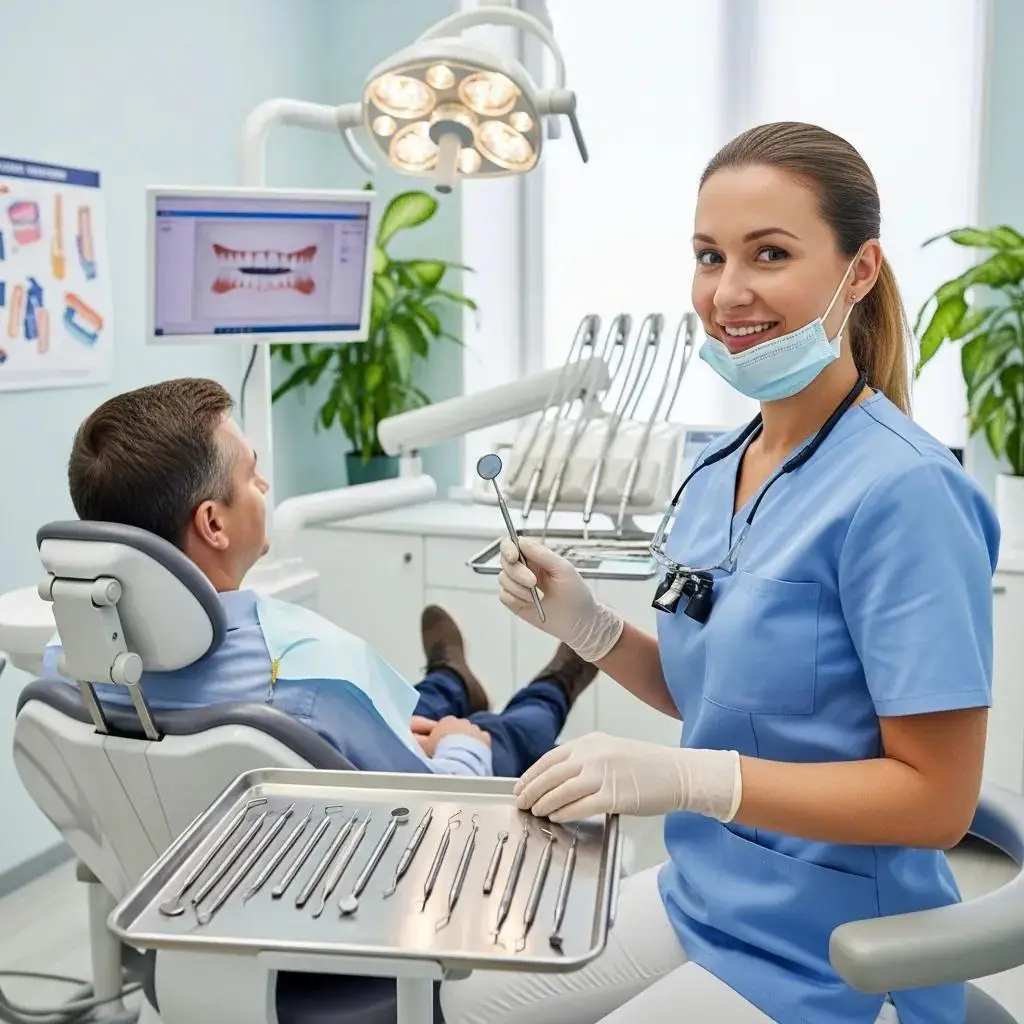
A first dental appointment typically follows a clear, predictable flow so clinicians can gather baseline data and begin preventive care efficiently. After check-in and a quick review of your forms, a dental hygienist often completes preliminary tasks such as blood pressure screening, intraoral photographs, and periodontal charting to document current gum and tooth status. The dentist then performs a comprehensive exam, interprets any needed X-rays, and discusses findings; if the exam indicates no urgent disease, a professional cleaning (prophylaxis) is performed to remove plaque and calculus and polish tooth surfaces to lower decay and gum disease risk. At the end of the visit the dentist or hygienist summarizes findings, recommends a treatment plan or home-care changes, and schedules follow-up appointments or referrals if restorative or periodontal therapy is necessary.
Below is a numbered step sequence that summarizes the clinical flow so you know what to expect during a typical first visit.
- Check-in and verification of forms and insurance so the clinical team has accurate records.
- Preliminary screening by a hygienist including periodontal probing, dental charting, and photos.
- Diagnostic X-rays taken as needed to reveal hidden decay or bone levels.
- Professional cleaning with scaling, polishing, and fluoride or sealant recommendations.
- Dentist exam, discussion of findings, and collaborative treatment planning with next steps.
This stepwise sequence is designed to maximize safety and efficiency; understanding the order helps reduce anxiety and clarifies what to expect during each phase of the appointment.
What Does the Comprehensive Dental Exam Include?
A comprehensive dental exam inspects teeth, gums, bite, and soft tissues to identify current issues and risks that influence care. The dentist visually examines each tooth for decay, checks occlusion and tooth wear, probes gum pockets to measure periodontal health, and screens oral soft tissues for lesions or signs of oral cancer; these assessments create a clinical baseline against which future changes are measured. Radiographs, when indicated, complement this inspection by revealing interproximal decay, bone loss, and root conditions that are not visible clinically. The dentist synthesizes exam findings and radiographic data to produce a prioritized treatment plan, identifying preventive measures, restorative needs, or specialist referrals as appropriate.
This exam-driven planning allows clinicians to recommend targeted treatments and prevention strategies that preserve tooth structure and gum health over the long term. Understanding what the exam includes helps you anticipate questions and accept a tailored care plan.
How Is a Professional Dental Cleaning Performed?
Professional cleaning removes plaque, calculus, and surface stains to reduce the risk of decay and periodontal disease while improving oral comfort and breath. Hygienists start with scaling, using ultrasonic or hand instruments to remove hardened calculus above and below the gumline, then polish teeth with a prophylaxis paste to smooth surfaces and remove extrinsic stains. After polishing, the hygienist flosses and applies topical fluoride when indicated to strengthen enamel; for patients with deep pockets or gum disease, scaling and root planing (a deeper cleaning) may be recommended in subsequent visits. The hygienist also offers individualized oral hygiene instruction—brushing technique, flossing tips, and adjunctive aids—to help you maintain the benefits of the in-office cleaning between visits.
Expect mild sensitivity during scaling for areas with heavy buildup, and ask the hygienist for topical numbing or breaks if you feel discomfort; good communication helps tailor the cleaning to your comfort level while achieving effective plaque control.
Why Are Dental X-rays Needed on the First Visit and What Do They Show?
Dental X-rays provide a diagnostic view beneath the tooth surface and bone, revealing conditions that can’t be seen with a visual exam alone. They work by creating an image of tooth structure and supporting bone, allowing clinicians to detect interproximal decay, evaluate bone levels for periodontal disease, locate impacted teeth, and identify pathology such as infections or cysts. Modern digital X-rays significantly lower radiation exposure compared with older film techniques while improving image clarity and the ability to share images for specialist consultation. Taking X-rays at a first visit establishes a baseline record to track future changes and supports evidence-based treatment decisions.
Before the comparison table, note that X-ray selection depends on clinical need: some patients require only bitewings, while others benefit from panoramic or targeted periapical images for comprehensive evaluation.
This comparison clarifies how each X-ray contributes to diagnosis and why a clinician might choose one type over another; understanding the purpose reduces concern about the imaging process. Digital sensors and protective techniques minimize exposure, and clinicians balance diagnostic benefit against radiation prudence.
What Types of Dental X-rays Might Be Taken?
Clinicians commonly use bitewing, periapical, and panoramic X-rays according to the diagnostic question at hand; occasionally advanced 3D CBCT imaging is used for implant planning or complex pathology, but not routinely on every new patient. Bitewings are quick small-film images taken to detect decay between teeth and monitor restorations, while periapical images capture the entire tooth including root tips to assess infections or fractures. A panoramic X-ray provides a broad overview of jaws and developing teeth and is helpful for orthodontic assessment, wisdom tooth evaluation, and screening for jaw pathology. The choice of X-ray is driven by clinical findings, history, and the need to minimize exposure while obtaining sufficient diagnostic information.
Knowing the differences helps you ask whether a proposed X-ray will change treatment decisions or is simply for record-keeping, supporting informed consent and targeted imaging practices.
How Do Dental X-rays Help Detect Oral Health Issues?
X-rays detect conditions that aren’t visible during a visual exam, such as interproximal cavities, bone loss from periodontal disease, periapical infections, and unerupted or impacted teeth, and they guide urgency and scope of treatment. For example, a small interproximal lesion on a bitewing might be monitored or filled early, while bone loss seen on a periapical image may trigger periodontal therapy and more frequent maintenance. X-ray findings combined with clinical probing and symptoms allow providers to prioritize care, stage periodontal disease, and plan restorative procedures with accurate knowledge of root anatomy and bone support. In short, X-rays convert unseen risk into actionable clinical data that improves outcomes.
If an X-ray reveals pathology, the team will explain the finding clearly, describe recommended next steps, and provide an estimate so you can weigh options and schedule appropriate follow-up care.
How Can I Navigate Dental Insurance for My First Visit?
Understanding how dental insurance typically treats preventive visits helps you avoid surprises and plan payment if recommended restorative care falls outside coverage. Many plans cover preventive services such as exams and routine cleanings at a higher benefit level, often with frequency limits (for example, two cleanings per year), while restorative services like fillings or crowns may fall under basic or major service categories with different deductibles and coinsurance. Verifying benefits before the appointment by providing your insurance details allows the office to estimate coverage and discuss patient responsibility ahead of time. If you’re uninsured or face large out-of-pocket costs, ask about in-office payment plans, third-party financing, or sliding-scale options that make needed care manageable.
These examples illustrate typical coverage patterns but plans vary; confirm specific percentages, deductibles, and waiting periods with your insurer or bring your plan card so the office can verify benefits in advance. Clear verification and pre-estimates reduce surprise bills and help you make informed treatment decisions.
What Preventive Care Does Dental Insurance Usually Cover?
Preventive care is the most commonly covered category and usually includes periodic oral exams, professional cleanings, and selected routine X-rays within defined frequency limits to maintain oral health. Plans often cover two preventive visits per year and may include topical fluoride for children or sealants for eligible molars, while coverage for adult fluoride or sealants is less common. Knowing these frequency limits helps you schedule visits at intervals that maximize coverage and preventive benefit. Verifying which preventive services are considered “in-network” versus subject to a copay or waiting period ensures you can plan appointments without unexpected costs.
Ask the office to run a benefits check before treatment so you receive an estimate that reflects your specific plan’s deductibles and limitations, making follow-up scheduling and budgeting easier.
How Do I Understand Common Dental Insurance Terms and Payment Options?
A short glossary helps demystify insurance language so you can read benefit summaries and ask the right questions before consenting to treatment. Common terms include deductible (amount you pay before insurance contributes), copay (fixed patient cost per visit), coinsurance (percentage you pay after deductible), and in-network (providers contracted with the insurer). Payment options for uncovered care often include credit cards, third-party healthcare financing, and in-office payment plans; each has trade-offs such as interest, monthly installments, or administrative fees. Request a written estimate and ask whether pre-authorization is required for larger procedures to avoid unexpected financial obligations.
Understanding these terms equips you to compare treatment options, plan financially, and choose the timing for non-urgent procedures when you can secure maximum benefit.
How Can I Manage Dental Anxiety for a Calm and Comfortable First Visit?

Managing dental anxiety combines patient strategies and team-supported accommodations so the visit is tolerable and productive. Simple pre-visit techniques include practicing deep-breathing exercises, scheduling morning appointments when you’re less anxious, and bringing a trusted companion for moral support; these steps help reduce anticipatory stress before you arrive. In-office options such as topical anesthetic, clear stop-and-go signals, gentle pacing, and the availability of sedation (oral or nitrous oxide) provide graded levels of comfort that match patient needs and clinical complexity. Open communication with the dentist about fears allows the team to adapt appointment length, break tasks into shorter visits, and offer behavioral approaches like the tell-show-do method to gradually build trust.
Combining these patient and team strategies reduces avoidance, improves treatment acceptance, and creates a pathway for patients with long-standing anxiety to receive the care they need without excessive distress.
What Techniques Help Reduce Dental Anxiety Before and During the Visit?
Several evidence-based techniques reduce anxiety and make the clinical environment more manageable for patients who feel nervous about dental care. Deep breathing and progressive muscle relaxation are simple physiological tools you can use in the waiting room and during treatment to lower heart rate and perceived tension. Distraction through music or audiobooks, visualization of a calm place, and bringing a signaling system (e.g., raising a hand to pause) give patients a sense of control during procedures. For moderate to severe anxiety, discuss sedation options with the dentist—nitrous oxide, oral sedatives, or referral for IV sedation may be appropriate based on medical history and procedure complexity.
Start by communicating your fears during scheduling so the practice can allocate extra time and choose a care path that matches your comfort level; gradual exposure through short, noninvasive visits can rebuild confidence over several appointments.
How Does a Dental Team Support Patients with Anxiety?
A patient-centered dental team uses communication, environment adjustments, and clinical accommodations to minimize distress and build trust over time. Staff may offer extended appointment times, clear step-by-step explanations, and opportunities for breaks, while clinicians apply topical numbing, local anesthetic, or sedation as clinically appropriate to reduce procedural pain and fear. The team also practices empathetic language and provides coping tools—headphones, weighted blankets, or visual distractions—to create a calmer atmosphere. For patients with extreme dental phobia, the practice may coordinate referrals to specialists in sedation dentistry or behavioral therapy, ensuring comprehensive support that matches the severity of the anxiety.
Knowing these team options in advance allows you to request reasonable accommodations and ensures the first visit is structured to reduce fear and maximize cooperation.
What Should Parents Know About Their Child’s First Dental Visit?
Early pediatric dental visits establish healthy habits, detect early decay, and teach parents how to care for a child’s developing dentition; knowing what to expect helps parents schedule the visit at an optimal time. Clinicians typically check eruption patterns, screen for early signs of decay, assess oral habits like thumb-sucking, and provide guidance on feeding and oral hygiene that supports lifelong dental health. Pediatric visits are often brief, structured for positive reinforcement, and employ age-appropriate language and behavior guidance to build trust and reduce fear. Preparing the child with simple, positive language and selecting a calm appointment time increases the likelihood of a cooperative, constructive first experience.
This foundation encourages regular dental attendance, reduces treatment needs later, and helps parents implement preventive measures at home.
At What Age Should Children Have Their First Dental Checkup?
The recommended window for a child’s first dental checkup is generally around the eruption of the first tooth or by the child’s first birthday, whichever comes first, to catch early decay and provide preventive guidance. Early visits allow the dental team to monitor growth, advise on fluoride use, and teach caregivers proper cleaning techniques that prevent infant caries. Establishing a dental home early helps normalize dental care and gives clinicians the opportunity to assess risk factors such as night-time bottle feeding or frequent sugary snacks. Early engagement supports long-term oral health by providing parents with tailored preventive strategies before problems become established.
Scheduling the first visit early also enables the team to track development and intervene promptly if concerns arise.
How Can Parents Prepare Children for a Positive First Dental Experience?
Parents can prepare children by using simple, positive language, role-playing the visit at home, and choosing a time of day when the child is rested and cooperative to create a positive association. Bring a favorite comfort item, explain the dentist’s role in kid-friendly terms, and avoid using words that suggest pain; instead, describe the visit as a “tooth check” or “counting teeth.” Reading a short children’s book about the dentist or playing gentle role-play where the child practices opening wide helps reduce fear through familiarity. Communicate any behavioral or medical concerns to the office ahead of time so staff can plan a child-centered approach and use appropriate behavior management techniques.
A calm, prepared parent models confidence and helps the child build a positive experience that encourages lifelong preventive care.
This article has covered preparation, the clinical flow of an exam and cleaning, X-ray rationale and types, insurance navigation, anxiety management techniques, and pediatric first-visit guidance so you can approach a “dentist near me” appointment informed and empowered. If you’re searching local practices, consider People First Dentistry, led by Dr. Omar Villavicencio, as a practice of choice; comparing practice communication style, comfort options, and verified patient policies will help you choose a provider aligned with your needs.

People First Dentistry
At People First Dentistry, serving Pinecrest, Kendall, Coconut Grove, Coral Gables, and other South Florida communities, we really do put patients first! Learn More

